Blogs

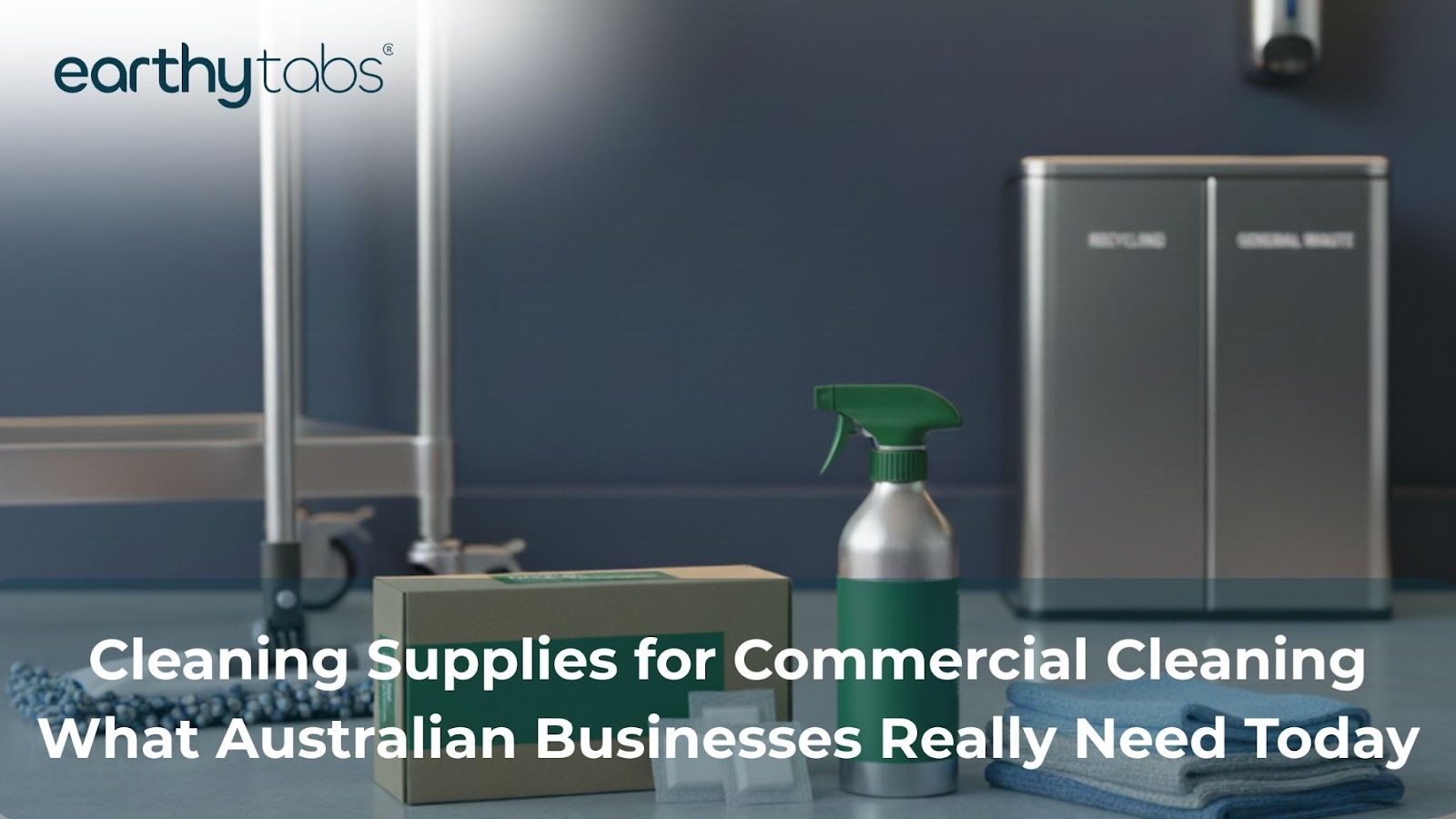

When people talk about commercial cleaning, the conversation often jumps straight to products. But for Australian businesses, cleaning supplies for commercial cleaning are about much more than just what goes in a bottle.
They’re about:
- Reliability across shifts
- Safety for staff and occupants
- Compliance with hygiene standards
- Storage, transport, and cost efficiency
- And long-term operational consistency
This is why many facility managers and cleaning contractors are rethinking how their entire cleaning supply system works, not just switching one product for another.
We’ll focus mainly on commercial cleaning supplies as a system, with cleaning tablets referenced only where they fit into a more advanced, modern setup.
What “Cleaning Supplies for Commercial Cleaning” Really Means in Practice
In a commercial environment, cleaning supplies must work at scale.
That means they need to perform consistently:
- Across multiple sites
- With different staff skill levels
- Under time pressure
- In high-traffic spaces
Commercial cleaning supplies typically include:
- Floor cleaning solutions
- Surface and touchpoint cleaners
- Bathroom and toilet cleaning products
- Kitchen and food-area cleaners
- Glass and window cleaners
- Degreasers and sanitisers
- Equipment-specific products (like descalers)
In Australia, many workplaces align their hygiene practices with guidance from Safe Work Australia and state health authorities, which emphasise correct chemical handling and safe systems of work:
So the question becomes less about “What’s the strongest cleaner?” and more about “What system delivers safe, repeatable results every day?”
Why Commercial Cleaning Supplies Are Different from Household Products
Household products are designed for:
- Occasional use
- One or two users
- Small areas
Commercial cleaning supplies are designed for:
- Daily or multi-daily use
- Multiple users across shifts
- Larger surface areas
- Documented cleaning processes
This difference matters. Using the wrong type of product in a commercial environment can lead to:
- Inconsistent results
- Increased chemical exposure
- Higher waste and costs
- Compliance risks
That’s why professional cleaning programs focus on standardisation.
The Real Challenge: Consistency, Not Cleanliness
Most commercial spaces don’t struggle with cleaning; they struggle with consistent cleaning.
Common problems include:
- Staff mix chemicals differently each time
- Overuse or underuse of products
- Confusion between similar-looking bottles
- Storage rooms full of half-used containers
- Difficulty scaling the same process across sites
This is why modern cleaning supplies are increasingly chosen based on systems, not just formulations.
The Shift Toward Smarter Commercial Cleaning Supply Systems
Across Australia, facility managers and cleaning contractors are moving toward:
- Fewer products with clearer purposes
- Easier training for staff
- Reduced chemical handling
- Simplified storage and transport
This has led to changes such as:
- Standardised colour-coded bottles
- Pre-measured formats
- Clear separation between surface cleaning and equipment maintenance
Read more about building a standardised commercial cleaning system.
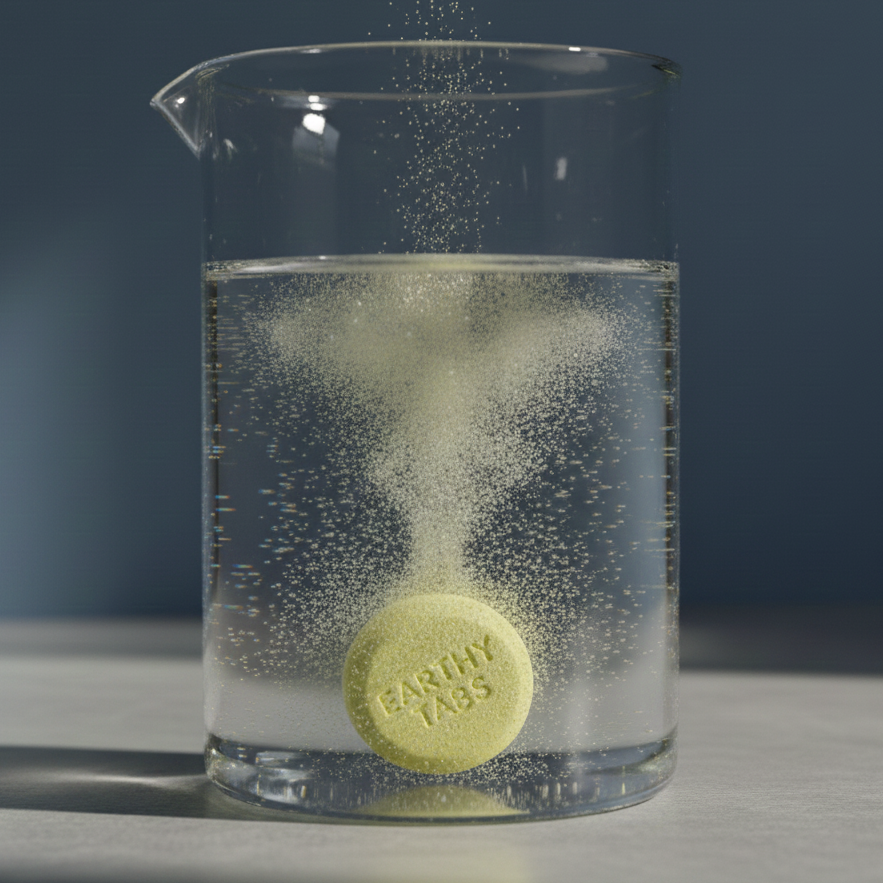
Where Cleaning Tablets Fit into Modern Commercial Cleaning Supplies
While cleaning tablets are covered in detail elsewhere, it’s worth understanding why they appear in modern commercial supply systems.
From a supply perspective, tablets help address:
- Dosing inconsistency
- Storage space limitations
- Training complexity
- Plastic and transport inefficiencies
They’re not a trend; they’re a response to operational problems.
In advanced setups, tablets are often used alongside:
- Clearly labelled refillable bottles
- Defined cleaning schedules
- Separate products for equipment maintenance (like descaling tablets)
For a deeper dive, see our full guide on commercial cleaning tablets
Cleaning Supplies vs Cleaning Equipment: An Important Distinction
Another common mistake is treating all cleaning supplies the same.
In commercial environments, there’s a clear line between:
- Surface cleaning supplies (floors, benches, bathrooms, glass)
- Equipment maintenance supplies (coffee machines, dishwashers, steamers)
This is where confusion often arises between cleaning tablets and descaling tablets.
Quick clarification:
- Cleaning products = hygiene and appearance
- Descaling products = equipment performance and longevity
Mixing the two can cause surface damage or equipment failure.
Food-safe cleaning and equipment maintenance guidance
Choosing the Right Cleaning Supplies for Different Commercial Environments
Not all commercial spaces need the same cleaning setup.
Offices & Commercial Buildings
Priorities include:
- Touchpoint hygiene
- Glass and surface clarity
- Fast turnaround cleaning
Supplies should focus on:
- Multi-surface cleaners
- Floor cleaners
- Glass cleaning products
Hospitality & Accommodation
Here, supplies must balance:
- Guest-facing presentation
- Back-of-house hygiene
- Equipment maintenance
This requires:
- Clear separation between surface cleaners and machine cleaners
- Easy-to-train systems for casual staff
Childcare, Aged Care & Healthcare
These environments demand:
- Predictable chemical use
- Reduced exposure risks
- Clear instructions
Standardised cleaning supplies help ensure safety across shifts.
Storage, Transport, and Risk Management
Cleaning supplies don’t just affect cleanliness; they affect operations.
Poorly planned supply systems can lead to:
- Cluttered chemical rooms
- Spill hazards
- Wasted stock
- Higher insurance and compliance risks
Modern commercial cleaning supply systems aim to:
- Reduce volume
- Improve organisation
- Limit manual handling
This is one of the key reasons many businesses reassess their entire supply approach rather than swapping individual products.
Cost Control: The Hidden Factor in Commercial Cleaning Supplies
The true cost of cleaning supplies isn’t just the purchase price.
It also includes:
- Waste from incorrect use
- Labour time spent mixing and correcting mistakes
- Storage space
- Transport and handling
- Plastic disposal
Businesses that standardise their cleaning supplies often see:
- Lower overall chemical spend
- Fewer mistakes
- Easier auditing of usage
Frequently Asked Questions
Are all commercial cleaning supplies interchangeable?
No. Each product should have a defined role within a cleaning system.
Should cleaning supplies be standardised across sites?
Yes. Standardisation improves consistency, safety, and training efficiency.
Are newer formats like tablets suitable for professional use?
When commercial-grade, they are designed specifically to support consistency and scale.
Do commercial cleaning supplies affect compliance?
Yes. Correct selection and usage support workplace safety and hygiene standards.
Rethinking Cleaning Supplies for Commercial Cleaning
The future of cleaning supplies for commercial cleaning isn’t about having more products, it’s about having the right system.
Australian businesses that succeed in maintaining high hygiene standards don’t rely on guesswork. They rely on:
- Clear product roles
- Consistent processes
- Easy-to-use formats
- Smarter storage and handling
Cleaning tablets are just one part of that evolution, but the bigger picture is simplifying cleaning at scale.
If your current setup feels cluttered, inconsistent, or hard to manage, the issue may not be effort.
It may be time to rethink the system behind your cleaning supplies.