Blogs

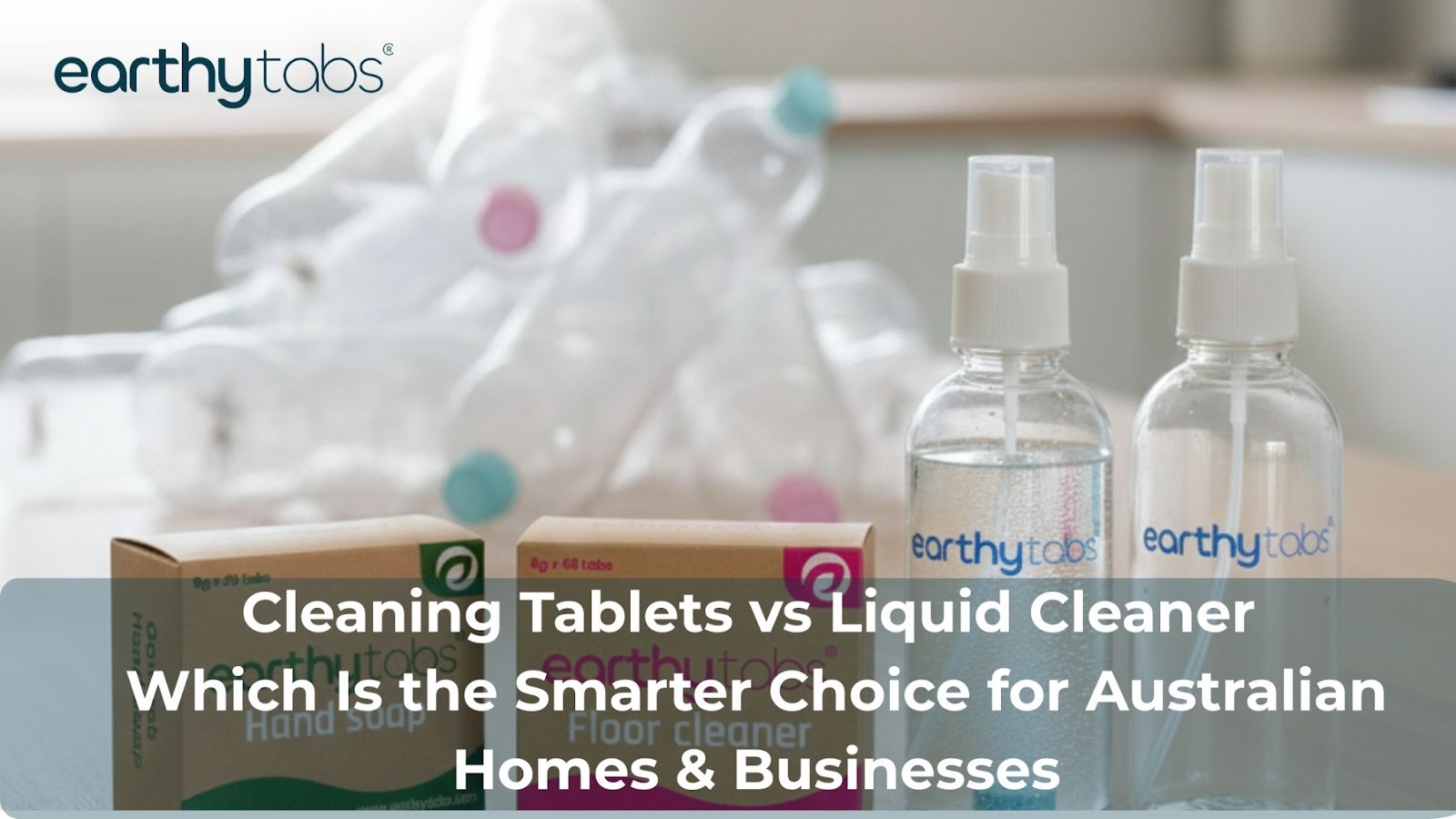

Walk down any supermarket aisle or storeroom in Australia, and you’ll see shelves stacked with bulky plastic bottles of liquid cleaners. For decades, that’s been the norm. But as sustainability, storage efficiency, and smarter cleaning practices take centre stage, many Australians are asking a simple but important question:
Cleaning tablets vs liquid cleaner which one is actually better?
This guide breaks it all down in plain English. We’ll compare performance, cost, convenience, and environmental impact, while also exploring the benefits of cleaning tablets, how they help reduce plastic from cleaning products, and whether they’re suitable as cleaning service products for professional use.
What Are Cleaning Tablets?
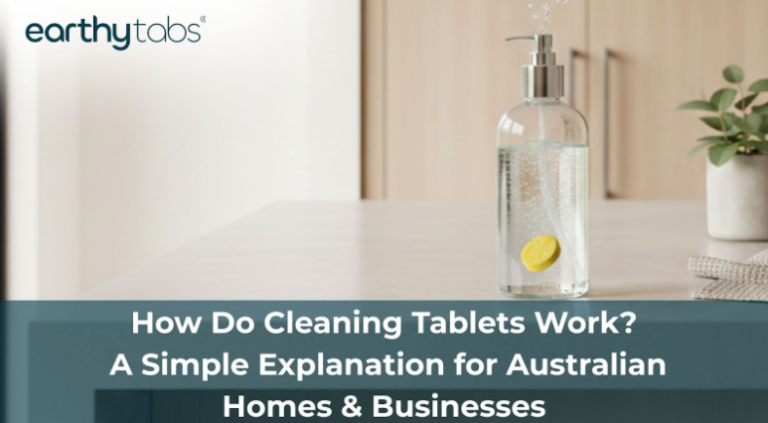
Cleaning tablets are concentrated cleaning formulations compressed into small, solid tablets. Instead of buying a pre-mixed liquid, you simply dissolve a tablet in water at home or on-site.
Once dissolved, the solution works just like a traditional cleaner without the unnecessary plastic bottle, transport weight, or dosing guesswork.
Common uses include:
- Multi-surface cleaning
- Bathroom and toilet cleaning
- Glass and mirror cleaning
- Floor and commercial surface cleaning
- Hand soap and dishwashing applications
What Are Liquid Cleaners?
Liquid cleaners are pre-diluted cleaning solutions sold in plastic bottles, often 1L, 2L, or 5L containers. While convenient, most of the bottle’s weight is simply water.
Liquid cleaners dominate both household and commercial cleaning spaces, but they come with hidden costs: plastic waste, transport emissions, storage space, and product wastage due to over-pouring or spillage.
Cleaning Tablets vs Liquid Cleaner: A Side-by-Side Comparison
| Feature | Cleaning Tablets | Liquid Cleaners |
| Cleaning effectiveness | Commercial-grade when formulated correctly | Commercial-grade |
| Plastic packaging | Minimal or none | High (single-use bottles) |
| Transport emissions | Very low | High (shipping water) |
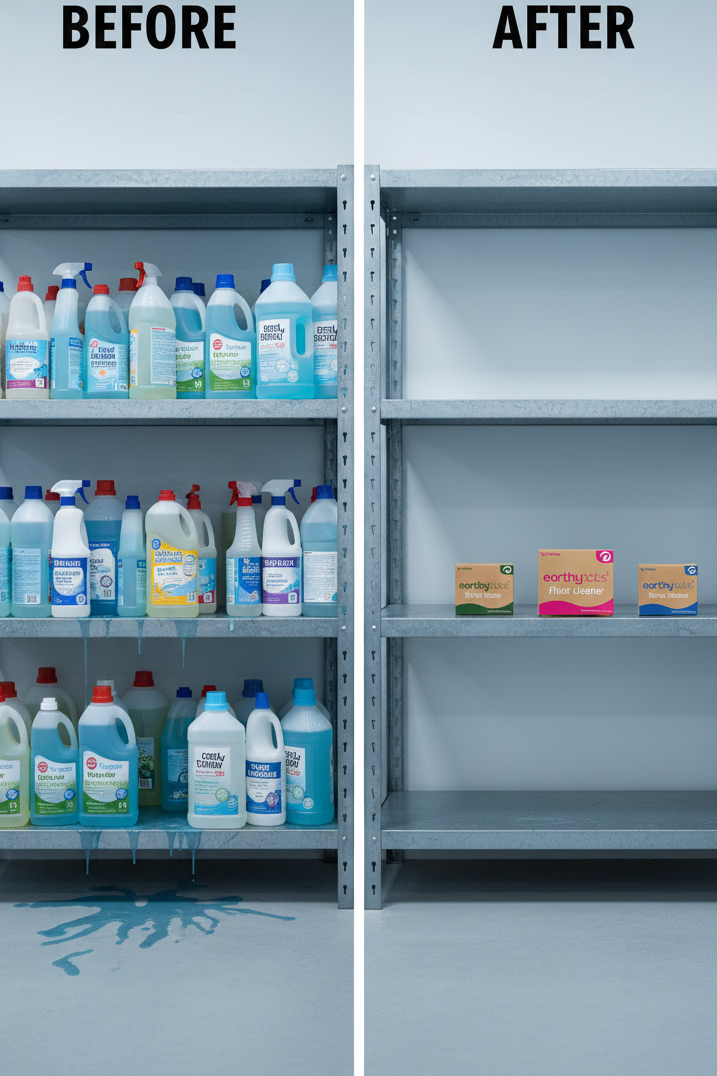
| Storage space | Compact | Bulky |
| Dosing accuracy | Pre-measured | Often inconsistent |
| Waste & spills | Almost zero | Common |
| Cost efficiency | High over time | Higher long-term cost |
Bottom line: When it comes to efficiency, sustainability, and long-term value, cleaning tablets are quickly outperforming traditional liquids.
Are Cleaning Tablets Better Than Liquid Cleaners?
Short answer: Yes for most use cases.
Long answer: Cleaning tablets are better when you care about reducing waste, saving space, lowering costs, and maintaining professional-level cleanliness.
Liquid cleaners still “work,” but they’re a legacy system designed for convenience decades ago not for today’s sustainability goals or modern operations.

The Real Benefits of Cleaning Tablets
1. Reduced Plastic Waste
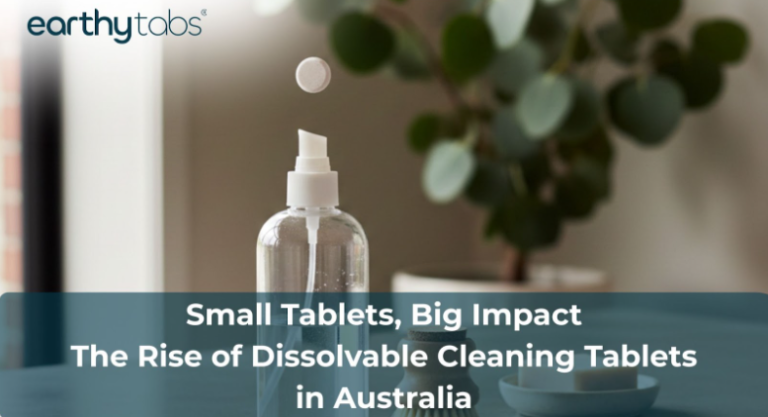
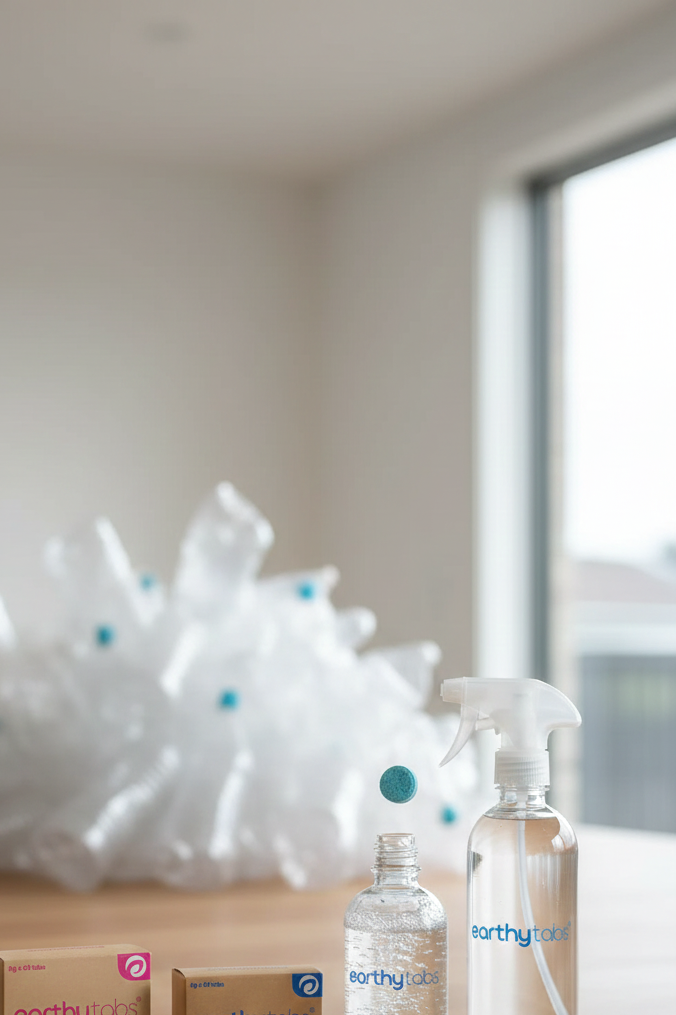
One of the biggest benefits of cleaning tablets is how dramatically they help reduce plastic from cleaning products. Instead of disposing of dozens (or hundreds) of plastic bottles every year, you reuse one durable spray bottle.
For Australian households and businesses trying to meet sustainability targets, this is a simple but powerful switch.
2. Lower Transport Emissions
Shipping liquid cleaners means transporting water. Tablets remove that entirely. Smaller shipments mean:
- Fewer trucks on the road
- Lower fuel usage
- Reduced Scope 3 emissions
This is especially important in Australia, where long-distance transport is common.
3. Space-Saving Storage
Ask any facility manager or cleaner: storage space is expensive.
Cleaning tablets can replace entire shelves of 5L liquid containers with a single compact box freeing up space in cupboards, cleaner rooms, and storerooms.
4. Consistent, Accurate Dosing
Liquid cleaners rely on human judgement often resulting in overuse. Tablets are pre-measured, ensuring:
- Consistent cleaning results
- Less chemical waste
- Lower costs per clean
5. Cost Efficiency Over Time
While the upfront price can appear similar, tablets often win long-term by:
- Eliminating wasted product
- Reducing freight and storage costs
- Minimising packaging expenses
Reducing Plastic from Cleaning Products in Australia
Australians are more environmentally aware than ever. With growing concern around landfill, ocean pollution, and microplastics, switching to low-waste cleaning solutions is a practical step anyone can take.
Cleaning tablets directly address the problem:
- No disposable spray bottles
- No 5L plastic drums
- No unnecessary packaging
For organisations working toward ESG goals or sustainability initiatives, tablets aren’t just a “green option”; they’re a measurable improvement.
Cleaning Tablets as Cleaning Services Products
One common misconception is that tablets are only for households. In reality, they’re increasingly popular as cleaning services products across Australia.
Where Cleaning Tablets Work Best:
- Commercial cleaning companies
- Hospitality venues (cafés, hotels, restaurants)
- Aged care and childcare facilities
- Gyms and wellness centres
- Offices and strata buildings
Professional cleaners value tablets for:
- Easier transport between sites
- Faster setup and mixing
- Reduced chemical handling risks
- Cleaner, safer storage rooms
Do Cleaning Tablets Clean as Well as Liquids?
Yes, when formulated for commercial use, cleaning tablets match or exceed the performance of traditional liquids.
Modern tablets are designed to:
- Dissolve completely
- Cut grease and grime
- Leave minimal residue
- Be safe on common surfaces
The cleaning power comes from the formulation, not the format.
Best Natural Cleaning Products: Where Do Tablets Fit?
If you’re searching for the best natural cleaning products, tablets are often a strong contender.
Look for tablets that:
- Use biodegradable ingredients
- Avoid harsh solvents
- Reduce unnecessary dyes and fragrances
- Focus on performance with minimal environmental impact
“Natural” doesn’t always mean weak. Many modern formulations balance safety with serious cleaning power.
Myths About Cleaning Tablets (Debunked)
Myth 1: Tablets are weaker than liquids
False. Strength depends on formulation, not format.
Myth 2: Tablets take too long to dissolve
Most dissolve in under a minute in warm or cold water.
Myth 3: Tablets are only for eco-enthusiasts
They’re now widely used in professional cleaning environments.
Frequently Asked Questions
Are cleaning tablets safe for daily use?
Yes, when used as directed, they are suitable for daily household and commercial cleaning.
Can cleaning tablets replace all liquid cleaners?
In most cases, yes multi-surface, bathroom, glass, floor, and even hand soap tablets are widely available.
Are cleaning tablets better for Australian businesses?
Absolutely. Reduced freight costs, storage efficiency, and sustainability benefits make them ideal for Australian conditions.
Do cleaning tablets help reduce costs?
Over time, yes especially by cutting waste, storage needs, and overuse.

Cleaning Tablets vs Liquid Cleaner
So, cleaning tablets vs liquid cleaner – which wins?
For Australians looking to clean smarter, reduce plastic waste, and future-proof their cleaning routines, cleaning tablets are the clear winner.
They offer:
- Comparable (or better) cleaning performance
- Major reductions in plastic waste
- Lower transport emissions
- Easier storage and handling
- Long-term cost savings
Liquid cleaners had their time. Tablets are what cleaning looks like next.
Ready to Rethink the Way You Clean?
Switching formats won’t solve every environmental challenge, but it’s one of the easiest, most practical changes you can make. One tablet at a time, Australians are proving that better cleaning doesn’t have to come in a plastic bottle.
Transform your cleaning operations into measurable sustainability wins..