Blogs

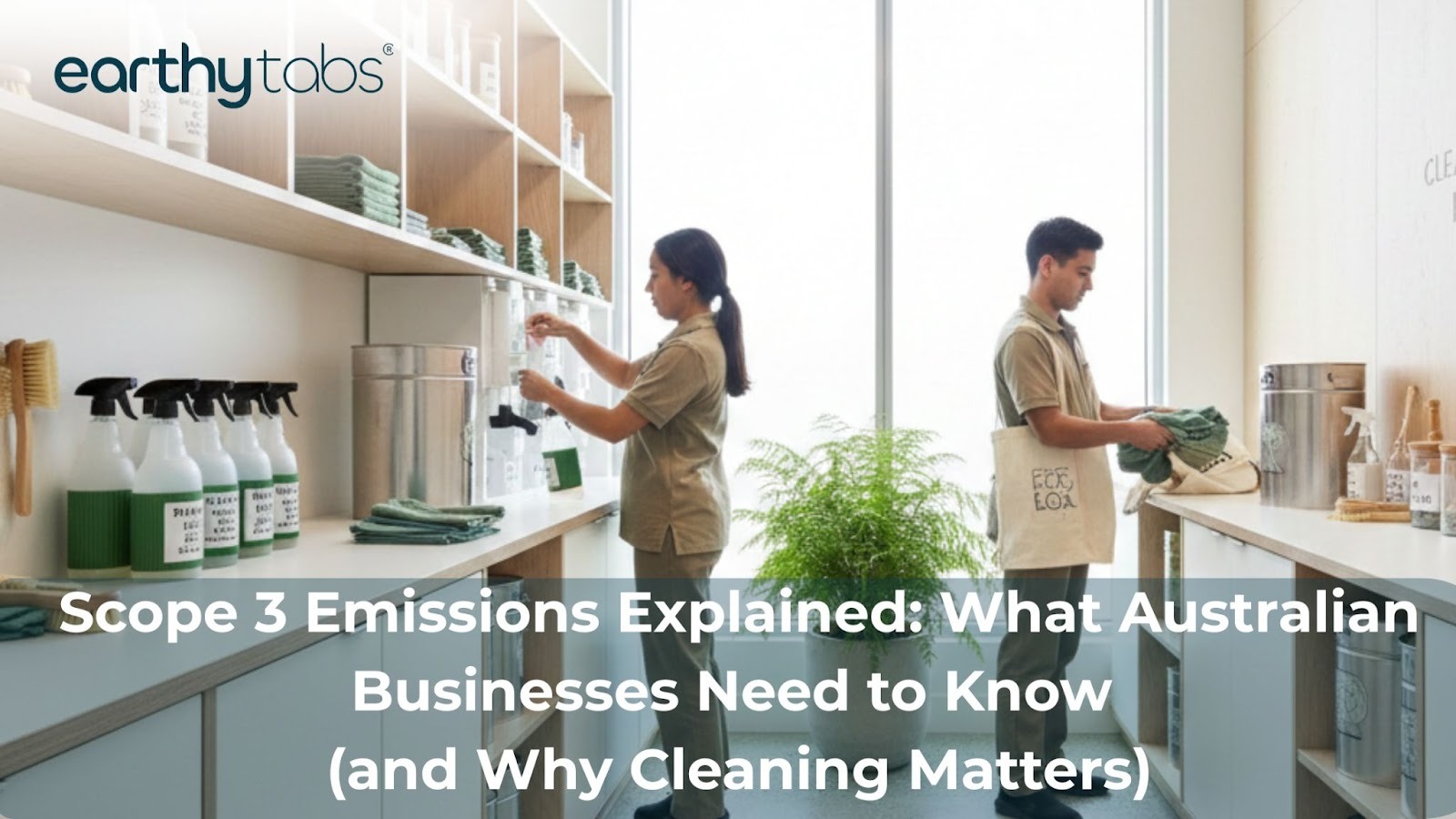

If you’ve started hearing the term scope 3 emissions more often, you’re not alone. Across Australia, sustainability managers, procurement teams, and facility operators are being asked a new question:
“What are your Scope 3 emissions – and can you prove them?”
For many organisations, that’s where things get uncomfortable. Because while Scope 1 and Scope 2 emissions are relatively straightforward, Scope 3 emissions are messy, indirect, and often invisible.
Yet they typically make up 70–90% of a company’s total carbon footprint.
clearly, practically, and with real relevance to Australian businesses and the cleaning industry.
What Are Scope 3 Emissions?
In simple terms, Scope 3 emissions are all the indirect emissions that occur across your value chain, outside of the emissions you directly control.
Under the Greenhouse Gas Protocol, emissions are grouped into three scopes:
- Scope 1: Direct emissions (fuel you burn, vehicles you own)
- Scope 2: Indirect emissions from purchased energy (electricity, gas)
- Scope 3: Everything else, suppliers, transport, waste, products, and services you buy
So if you didn’t burn it yourself, and you didn’t buy the electricity directly, but it still happened because of your business, it’s probably Scope 3.
Scope 3 Emissions in Australia: What’s Different?
When we talk about scope 3 emissions in Australia, the principles are global but the pressure is local.
In Australia, Scope 3 is increasingly driven by:
- ESG reporting requirements
- Government frameworks like the National Greenhouse and Energy Reporting (NGER)
- Supply-chain transparency expectations from large enterprises
- Sustainability-led procurement and tender scoring
Large organisations are now asking their suppliers, including cleaners and facility service providers, to disclose their Scope 3 impact.
That’s where many cleaning companies get stuck.
Why Are Scope 3 Emissions So Hard to Measure?
Scope 3 emissions are difficult because they are:
- Indirect – they happen outside your direct operations
- Supplier-dependent – you rely on others for data
- Fragmented – dozens of categories, thousands of touchpoints
- Estimate-driven – often based on averages, not real usage
For years, businesses have relied on assumptions rather than actual data.
And regulators, clients, and investors are starting to push back.
What Counts as Scope 3 Emissions in Cleaning & Facility Management?
This is where things get interesting.
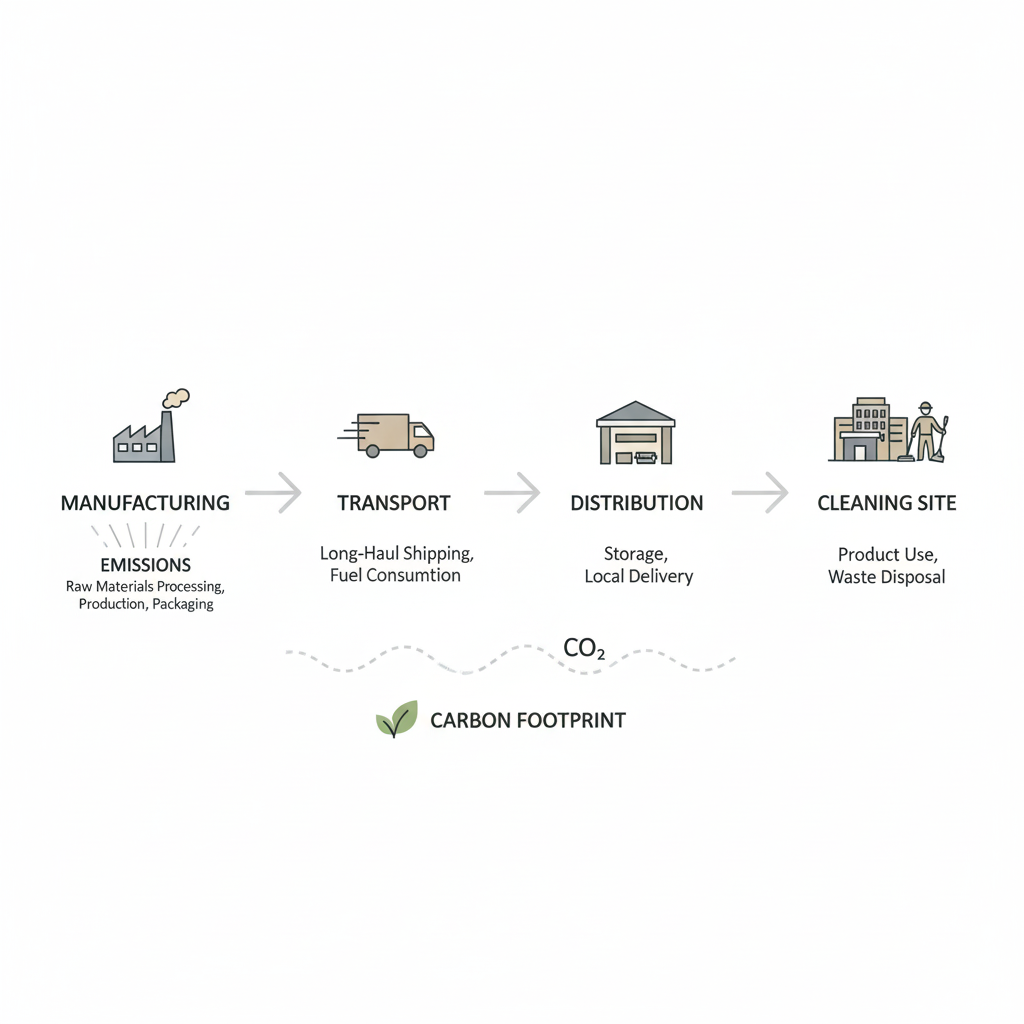
For cleaning and facilities teams, Scope 3 emissions include:
- Manufacturing of cleaning chemicals
- Plastic packaging (especially 5L chemical bottles)
- Transport of chemicals to warehouses and sites
- Storage and handling emissions
- Overdosing, spillage, and chemical waste
- Disposal of empty plastic containers
Most of this impact happens before the cleaner even opens the bottle.
Yet it all sits under your organisation’s Scope 3 footprint.
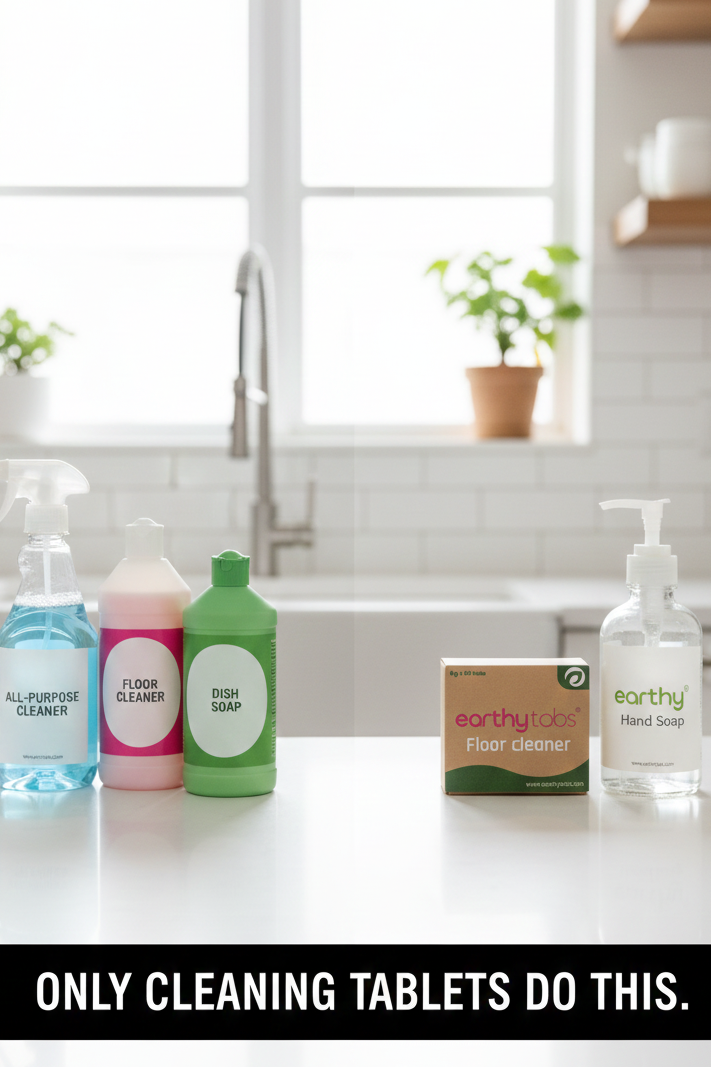
Look at These Cleaning tablets …
Scope 3: Specifically for Cleaning: The Hidden Impact
Let’s talk honestly about Scope 3, specifically for cleaning.
Traditional cleaning systems rely on:
- Heavy plastic containers
- Water-based liquids are transported long distances
- Manual dilution (which leads to waste)
- Frequent restocking and disposal
Each step quietly adds to:
- Transport emissions
- Plastic waste
- Landfill volume
- Indirect carbon output
Because it’s “just cleaning,” this impact is often overlooked even though it’s measurable and reducible.
One emerging approach in Australia is impact-measured cleaning, where businesses can actually see how changes in products affect plastic, transport emissions, and waste across their Scope 3 footprint, something platforms like Earthy Tabs are actively building into everyday cleaning systems.
Why Australian Businesses Can’t Ignore Scope 3 Anymore
Across Australia, Scope 3 is becoming a commercial issue, not just an environmental one.
Ignoring it can mean:
- Losing tenders
- Failing ESG audits
- Weak sustainability reporting
- Reduced credibility with stakeholders
On the flip side, businesses that measure and reduce Scope 3 emissions gain:
- Competitive advantage
- Stronger sustainability scores
- Clear proof, not just claims
How to Reduce Scope 3 Emissions in Australia (Practical Steps)
You don’t need to solve everything at once. Start where impact is visible.
1. Audit Your Supply Chain
Understand which suppliers contribute most to emissions.
2. Reduce Plastic at the Source
Plastic packaging is a major Scope 3 driver in cleaning.
3. Cut Transport Weight & Volume
Lighter products = fewer transport emissions.
4. Eliminate Chemical Waste
Pre-dosing removes guesswork and overuse.
5. Measure, Don’t Assume
Real data beats sustainability estimates every time.
Common Scope 3 Questions Australian Businesses Ask
Are Scope 3 emissions mandatory in Australia?
Not universally yet, but they are increasingly expected in ESG, tenders, and large-enterprise reporting.
Is cleaning really a Scope 3 issue?
Yes. Cleaning sits squarely in purchased goods and services, one of the largest Scope 3 categories.
Can Scope 3 reductions be proven?
Yes, but only if systems are designed to measure impact, not just claim it.
The Future of Scope 3: From Estimates to Proof
The future of Scope 3 emissions in Australia is moving fast from rough estimates to verifiable data.
Businesses are shifting from:
“We think this helps.”
to
“Here’s exactly what we reduced.”
This is where modern cleaning systems, impact calculators, and transparent reporting change the game, especially for high-volume, everyday activities like cleaning.
Scope 3 Is Where Real Change Happens
Scope 3 emissions aren’t abstract. They’re embedded in the daily decisions businesses make, including how they clean their spaces.
For Australian organisations serious about sustainability, Scope 3 is no longer optional. It’s where credibility lives.
Start small. Start measurable. Start where waste is obvious.
Because when Scope 3 becomes visible, it becomes fixable.